Brands Allegedly Ban E-Sales in Hangzhou’s Livestreaming Hub
Several luxury brands reportedly banned residents of a neighborhood known for its concentration of livestreamers and influencers in China’s eastern city of Hangzhou from buying their products online. The restrictions were quietly lifted by Tuesday, but the move has sparked wider discussion over consumer rights and the costs businesses face from returns.
Domestic media first reported the issue last Friday after a customer was told by a representative of an unnamed store that the entire Yingfeng neighborhood was restricted from online purchases because there were too many bai piao — a slang term referring to customers who exploit platforms’ seven-day no-reason return policy to claim refunds on used products.
China adopted its seven-day online return policy in 2014, allowing consumers to return eligible online purchases and receive a full refund within seven days of receipt, without having to provide a reason. Returned items must meet certain conditions, such as being in good condition.
Several e-commerce platforms — including Taobao, Kuaishou, and Pinduoduo — later expanded consumer protections, introducing “refund-without-return” policies. Under the policies, buyers could in certain cases apply for, and obtain, refunds for products with quality issues directly through the platform without merchant approval or needing to return the goods. The policies have since been adjusted to grant merchants greater autonomy in handling after-sales disputes, but some customers continue to exploit them.
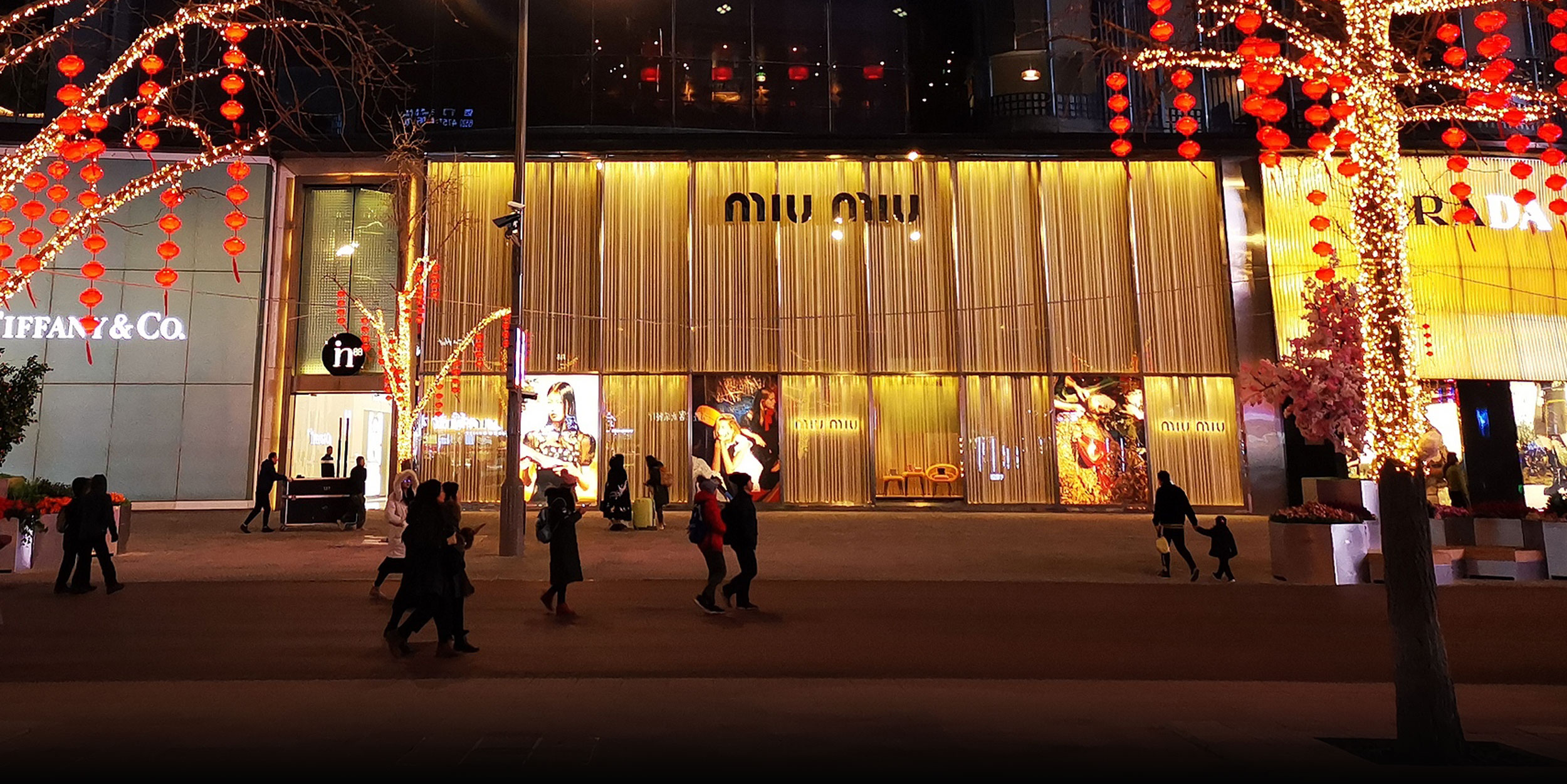
In the days following the first media report, other luxury brands, including Yves Saint Laurent (YSL), Prada, and Prada’s subsidiary Miu Miu, were also reported to have restricted the neighborhood from making purchases on e-commerce platform Taobao.
Yingfeng, established in 2020, has been dubbed “the youngest neighborhood in Xiaoshan District,” the southeastern district of Hangzhou where it is located. The area has attracted a large number of media agencies, making it one of the city’s major livestreaming hubs and leading to more frequent purchases of products featured in reviews and unboxing videos, as well as clothes worn during group livestreams.
Customer service representatives for YSL and Miu Miu responded online, saying that the brands had not imposed purchase restrictions and instead suggested customers resolve the issue by changing their account or delivery address, restarting the app, or refreshing the page. As of Tuesday, domestic media reported that online purchases had been restored across all of Hangzhou.
The topic has garnered more than 42 million views on microblogging platform Weibo. Some users criticized the unfairness of entire neighborhoods seemingly being “collectively punished,” while others sided with the brands and called for stronger regulation from e-commerce platforms.
Beyond luxury brands, some maternity and baby brands, as well as trendy accessories brands, were also reportedly unavailable for purchase in Yingfeng.
“Sometimes consumers apply for returns just before the seven-day no-reason deadline, but the clothes that come back have clearly been worn — they smell of perfume, have foundation stains and false eyelashes attached, and sometimes even blood stains,” a seller surnamed Wang told domestic media.
The phenomenon of “blacklisting an entire neighborhood” is not limited to Hangzhou. Shiling Town in the southern Guangzhou City’s Huadu District — known as China’s leather goods capital — has also been banned from online purchases by some well-known handbag and clothing stores.
Zhang Jian, a lawyer at Beijing Zhuohao Law Firm, said that merchants have a primary obligation to explain and notify consumers and explain when purchases are blocked.
“From the perspective of civil contracts, businesses have the right to choose not to transact with specific consumers before accepting an order,” Zhang said. “However … this kind of ‘collective punishment’-style blacklisting may violate laws, including the Consumer Protection Law, and infringe on consumers’ rights to fair transactions.”
Zhuang Shuai, an e-commerce retail analyst and the founder of Bailian Consulting, in Beijing, told domestic media that platforms should strengthen regulation by improving after-sales rules, such as by setting return-rate thresholds and establishing consumer blacklists. He also called for consumers to “uphold basic standards of honesty.”
Editor: Marianne Gunnarsson.
(Header image: VCG)